ISO 13485:2016 Certified
40+ Years of Excellence
600+ Products
Download Catalog
BUYER GUIDE | ACCESS SYSTEMS COMPARISON

Safety Trocar vs Regular Trocar

A safety trocar generally includes a mechanism intended to cover, retract or reduce exposure of the penetrating tip according to its design. A regular trocar usually has a conventional obturator without that specific protective mechanism.

However, neither term describes one universal product design. Safety trocars and regular trocars can differ in tip profile, blade, diameter, cannula, valve, seal, fixation and reusable or disposable configuration. A safety trocar is not automatically suitable for every procedure, and the word “safety” does not mean risk-free. Final selection must be made by the authorised surgeon and healthcare institution.

ISO 13485:2016 Certified
CE Certified Quality
Technical Selection Checklist
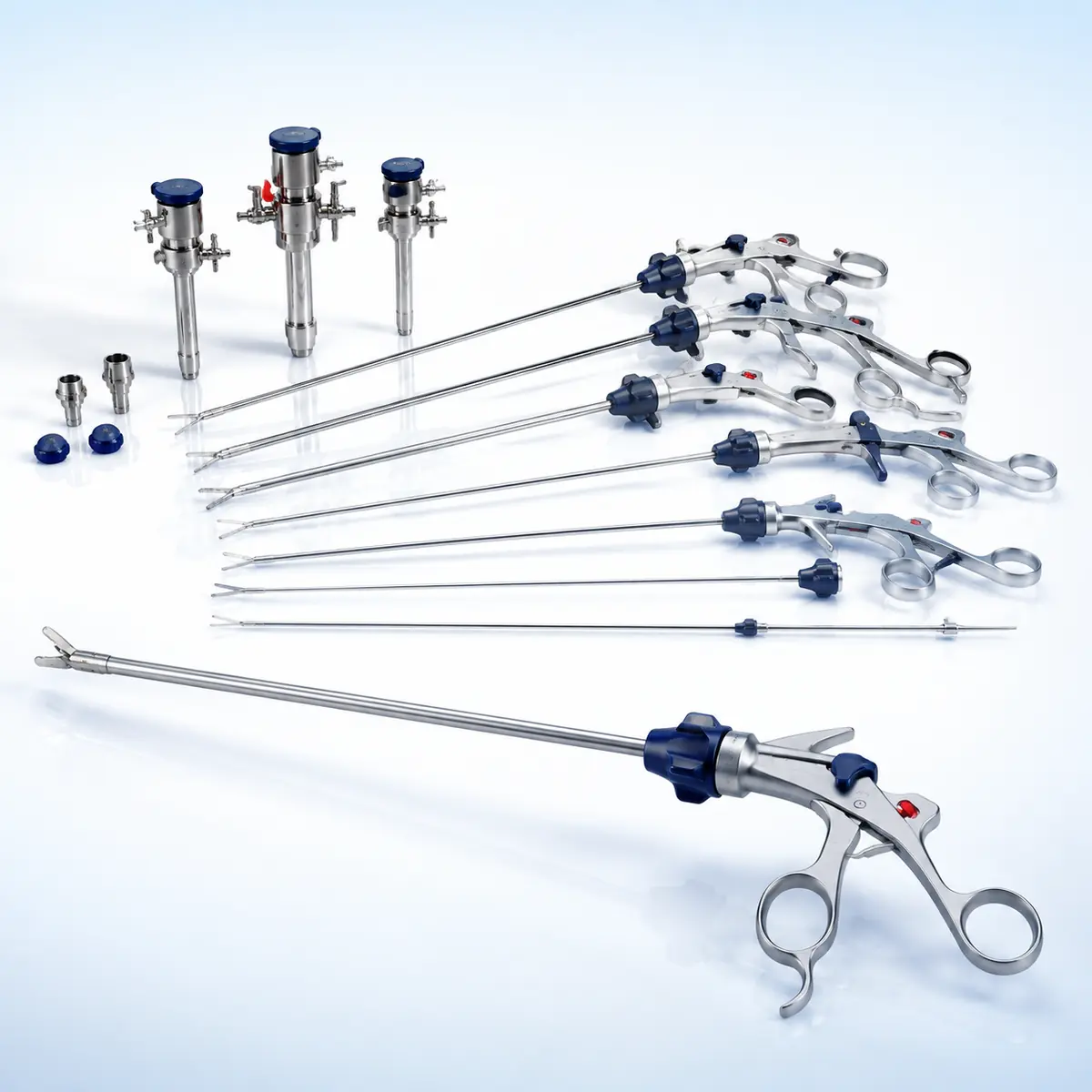
Gynecology Instruments surgical instrument on a clean clinical blue background
Quick Matrix

Quick Comparison

This comparison is general. The applicable instructions and specifications for the exact product take priority.

Selection Point Safety Trocar Regular Trocar
Tip mechanism May include a shielded, retracting or locking mechanism Usually uses a conventional non-shielded obturator design
Mechanical complexity Generally has additional moving components May have fewer moving components, depending on design
Tip options May be bladed, shielded or another defined design May be sharp, pyramidal, conical, blunt, bladed or bladeless
Inspection Requires checking the protective mechanism and other components Requires checking the obturator, cannula, valve, seal and other components
Reprocessing Product-specific; mechanism and internal spaces may require additional attention Product-specific; cannula, valve, seal and stopcock require attention
Maintenance Mechanism, springs or shields may require evaluation Obturator, valve, seals and cannula may require evaluation
Cost May have a different purchase and maintenance cost Cost depends on design, size and configuration
Best option Depends on surgeon-approved requirements Depends on surgeon-approved requirements
Mechanism Analysis

What Is a Safety Trocar?

A safety trocar is a laparoscopic access instrument with a mechanism intended to alter exposure of the penetrating part according to the product’s design.

For example, some shielded trocar designs use:

  • A sharp or bladed obturator
  • A spring-loaded shield
  • A mechanism that retracts during tissue passage
  • A shield that advances over the tip after entering a space
  • A locking feature intended to maintain the shield’s position

An FDA-reviewed device description provides an example of a bladed trocar with a spring-loaded shield that advances to cover the blade according to its design. (FDA safety-trocar device description)

* Not every product marketed as a “safety trocar” uses the same mechanism. Buyers must obtain the exact technical description before ordering.

What Is a Regular Trocar?

“Regular trocar” is a commercial term rather than one precise technical design. It may refer to a conventional trocar without a spring-loaded protective shield.

Depending on the product, its obturator may be:

  • Sharp • Pyramidal • Conical
  • Blunt • Bladed • Bladeless
  • Dilating • Other manufacturer-defined design

A regular trocar assembly may include:

Obturator • Cannula • Valve • Seal • Insufflation stopcock • Fixation feature • Reducer

* The buyer should not assume that two products called “regular trocars” have identical tips or components.

Safety Trocar Does Not Always Mean Bladeless

A common source of confusion is treating “safety trocar” and “bladeless trocar” as interchangeable terms. They are not necessarily the same.

Safety Trocar:

Describes a product with a protective, shielded, retracting or locking mechanism according to its design.

Bladeless Trocar:

Describes an obturator without a cutting blade. It may use a conical, dilating or another non-bladed tip.

A trocar can therefore be: Bladed and shielded • Bladed and non-shielded • Bladeless • Blunt • Optical • Another defined configuration. Always check the actual obturator design.

Safety Trocar Does Not Mean Risk-Free

The word “safety” refers to a product feature or mechanism. It does not eliminate the need for:

  • Qualified surgical judgement • Appropriate training
  • Correct product selection • Pre-use inspection
  • Correct assembly • Functional testing
  • Following applicable instructions • Hospital protocols
  • Removal of damaged products from use

A safety mechanism can also be damaged, incorrectly assembled, obstructed or non-functional. The authorised user must understand the particular mechanism before clinical use.

How a Shielded Mechanism May Work

The exact operation differs between products, but a shielded design may include:

  • A protective shield covering part of the penetrating tip
  • Retraction or movement of the shield during advancement
  • Advancement of the shield after the trocar enters an open space
  • A locking or retention feature

Note: This description is only a general explanation. It is not an instruction for trocar placement or clinical technique. Users must follow the instructions supplied for the specific product.

Component Comparison

Comparison of Trocar Components

Both trocar layouts contain similar channels and valves, but differ in obturator tip complexity.

Obturator

The safety trocar may have an obturator containing a shield, spring or locking mechanism. A regular trocar may use a simpler conventional obturator.

Cannula

Both types may use a cannula with a valve, seal, stopcock and fixation feature.

Valve and Seal

Valve design affects how the port accommodates compatible instruments and manages gas leakage. The valve should be evaluated independently of whether the product is labelled safety or regular.

Ports & Reducers

Either type may have an insufflation stopcock connection and may require a reducer when a smaller compatible instrument is used through a larger cannula.

Sizes and Dimensions Check

Safety and regular trocars are available in standard sizes: 3 mm/3.5 mm, 5 mm, 10 mm, 11 mm, 12 mm, and 15 mm.

* A size label alone is not sufficient to confirm system compatibility.

Buyers must verify:

Cannula internal diameter • Cannula external diameter • Compatible instrument diameter • Cannula working length • Obturator length • Valve range • Reducer compatibility

Reusable Life Comparison

Reusable Safety vs Reusable Regular Trocar

Procurement factors to evaluate when choosing between reusable configurations.

Procurement Point Reusable Safety Trocar Reusable Regular Trocar
Moving mechanism May contain additional shields, springs or locks May have a simpler obturator mechanism
Inspection Includes safety-mechanism function Includes tip, cannula, valve, seal and assembly
Cleaning access Mechanism and internal spaces may need attention Cannula, stopcock, valve and seal need attention
Replacement components May require product-specific mechanism parts May require valves, seals or other compatible parts
Repair evaluation Depends on mechanism and component availability Depends on obturator, cannula and valve condition
Reprocessing Must follow product-specific instructions Must follow product-specific instructions

* Neither type should be described as easier to clean without reviewing its exact construction.

Disposable Sterile Packaging
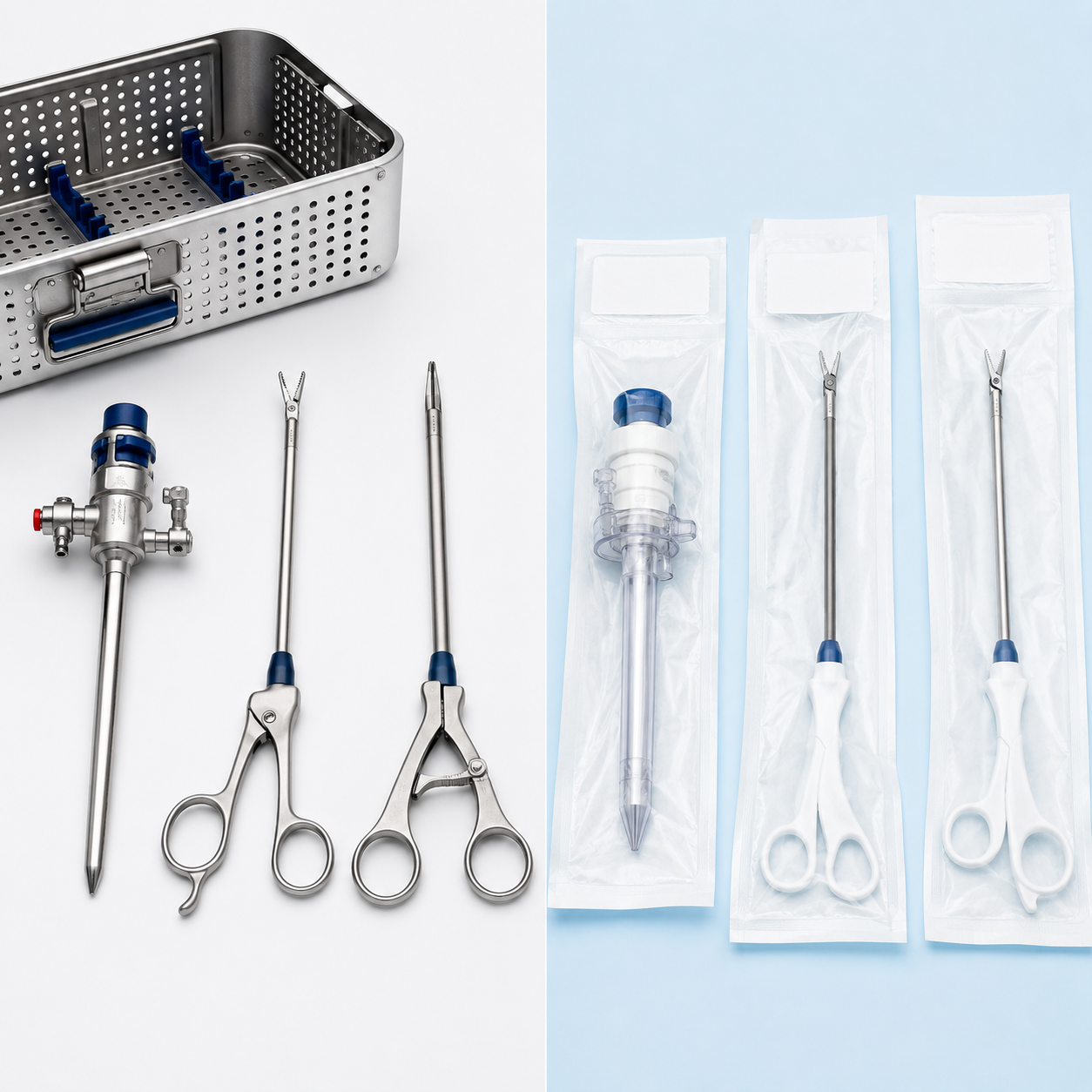
Visual placeholder representing a sterile single-use trocar package. A single-use trocar should not be assumed suitable for cleaning and reuse.
Single Use Check

Disposable Safety and Regular Trocars

Both safety and regular trocar designs may also be offered as sterile, single-use products.

When considering a disposable trocar, confirm these details:

  • Sterile supply condition
  • Packaging integrity • Expiry date
  • Size • Working length
  • Tip design
  • Cannula and valve design
  • Included reducer • Single-use labelling
  • Quantity per pack

A single-use trocar should not be assumed suitable for cleaning and reuse. Follow its labelling and applicable healthcare and regulatory requirements.

Which Trocar Costs More?

There is no universal price difference. The price can depend on:

  • Safety mechanism • Bladed/bladeless design
  • Reusable or disposable configuration
  • Diameter • Working length • Cannula material
  • Valve, seal, reducer, and fixation design
  • Packaging, documentation, and quantity
  • Brand or manufacturer • Component availability

Hospitals should compare total lifecycle costs rather than only the initial price. For reusable products, lifecycle considerations include reprocessing, inspection, maintenance, repair, replacement parts and downtime.

Which Trocar Is Better?

There is no universal answer. The appropriate choice depends on:

  • Intended procedure • Access technique
  • Surgeon training and preference
  • Patient and clinical considerations
  • Required diameter and working length
  • Existing instrument inventory
  • Hospital protocol and reprocessing capacity
  • Product availability and documentation
  • Procurement budget

The supplier can explain the available specifications, but the authorised surgeon and healthcare institution must choose the clinical configuration.

Pre-Purchase Checklist

When to Request Safety or Regular Trocars

Before choosing either trocar, confirm trocar type, size, working length, reusable/disposable requirement, tip design, cannula fixation design, valve, stopcock, reducer, and required documentation.

A buyer may specify a Safety Trocar when:

  • The surgeon has approved a shielded design
  • A particular protective mechanism is required
  • The hospital wants a specific product configuration
  • The tender specification explicitly requests it
  • The existing instrument set uses a compatible system
  • Replacement of an existing safety trocar is required

* The buyer should state the required mechanism rather than writing only “safety trocar.”

A buyer may specify a Regular Trocar when:

  • A conventional obturator design has been approved
  • The existing instrument set uses that configuration
  • The hospital has a standardised reusable system
  • A specific sharp, blunt, pyramidal or conical design is required
  • Replacement of an existing conventional trocar is needed

* The exact tip and cannula design should still be documented.

Information to Include in Your RFQ

Please send:

  • Safety or regular trocar requirement
  • Exact tip or mechanism description
  • Diameter • Cannula working length
  • Reusable or disposable requirement
  • Cannula fixation design (smooth/threaded/etc.)
  • Valve configuration • Stopcock requirement
  • Reducer requirement • Compatible instrument size
  • Quantity • Existing product photograph
  • Existing product marking • Required documentation
  • Delivery location • Required delivery date

* A photograph should be accompanied by measurements because visual appearance alone may not identify the exact trocar.

Safety Inspection

Pre-Use Trocar Inspection

The absence of a safety mechanism does not reduce the need for careful inspection.

Pre-Use Inspection: Safety Trocar

Depending on the product, inspect:

  • Obturator tip • Shield position
  • Shield movement • Spring or locking function
  • Cannula condition • Valve and seal
  • Stopcock • Reducer • Assembly
  • Cleanliness • Corrosion • Cracks or damage

If the mechanism does not function as intended, the trocar should be removed from use.

Pre-Use Inspection: Regular Trocar

Depending on the product, inspect:

  • Obturator tip • Cannula straightness
  • Valve and seal • Stopcock
  • Reducer fit • Assembly and locking
  • Cleanliness • Corrosion • Cracks
  • Physical damage

A trocar with damaged, missing, incorrectly assembled or non-functional components should be removed from use.

Sterilization Protocol

Reprocessing Reusable Trocars

Reusable safety and regular trocars may contain cannula lumens, valves, seals, stopcocks, sleeves, springs, shields, locks, and detachable components.

The healthcare facility should follow the product-specific instructions for:

  • Disassembly • Thorough cleaning
  • Brushing and flushing accessible channels
  • Rinsing • Drying • Inspection
  • Functional testing • Reassembly
  • Packaging • Sterilization • Storage

* A safety trocar’s mechanism may require additional inspection, but the exact process depends on its design.

When to Repair or Replace?

A trocar should be isolated and evaluated if there is:

  • A damaged tip • A bent cannula
  • A non-functional safety shield
  • A damaged spring or locking mechanism
  • Gas leakage • A damaged valve
  • A missing seal • A loose stopcock
  • Difficult assembly • Corrosion
  • Cracking • Retained residue

Repair feasibility depends on the product, mechanism, condition and availability of compatible components.

Quality Checked Trocars
Bharat Quality

Safety and Regular Trocars From Bharat Surgical

Bharat Surgical manufactures and supplies selected reusable laparoscopic trocars, safety trocars and reducers.

ISO 13485:2016-certified medical-device quality management system
ISO Registration Number: RQMD91/11579
Scope: Manufacturing, sale and servicing of laparoscopy, urology, gynecology, micro and general surgery instruments.
Certificate expiry: 11 September 2027

CE applicability and supporting documents must be confirmed for the specific trocar being quoted. (Internal link: Explore Laparoscopic Trocars)

Got Questions?

Frequently Asked Questions

Find immediate answers to common operational questions regarding safety and regular trocars.

A safety trocar generally includes a protective or shielded mechanism. A regular trocar generally uses a conventional obturator without that particular mechanism.

No. Product terminology varies. Check whether the exact design is bladed, bladeless, shielded, blunt or another configuration.

No. “Safety” describes a protective mechanism, while “bladeless” describes the absence of a cutting blade.

No. The term refers to a product feature and does not eliminate procedural risks, inspection requirements or the need for qualified use.

Depending on the design, a shield may retract during advancement and move forward to cover the penetrating tip after entering an open space.

It is generally a conventional trocar without a particular protective shield. Its tip may be sharp, pyramidal, conical, blunt, bladed or bladeless.

Neither type is universally better. Selection depends on the procedure, surgeon, access technique, size, hospital protocol and product design.

Some safety trocars are reusable, while others are single-use. Confirm the product’s intended configuration.

Regular trocars may be reusable or disposable. Check the product labelling and instructions.

They may contain additional moving components, but maintenance requirements depend on the exact mechanism and product instructions.

That cannot be determined from the terms “safety” and “regular” alone. Cleaning complexity depends on valves, lumens, seals and mechanisms.

They may have different pricing because of their mechanism, but price also depends on size, material, reusable status, brand and quantity.

Common requirements include 3 mm, 5 mm, 10 mm, 11 mm, 12 mm and 15 mm, subject to product availability.

Only where compatibility is confirmed by the applicable product system. Similar sizes do not automatically mean components are interchangeable.

Repair may be possible for certain reusable products, depending on condition, design and component availability.

Check the tip, shield movement, locking mechanism, cannula, valve, seal, stopcock, assembly and cleanliness.

Check the obturator tip, cannula, valve, seal, stopcock, reducer, assembly, cleanliness and physical condition.

Follow the product-specific instructions and the healthcare facility’s validated cleaning, packaging and sterilization procedures.

Buyers can enquire about available reusable safety trocars, conventional trocars, cannulas and reducers.

Provide the type, mechanism, diameter, working length, reusable or disposable requirement, valve, reducer, quantity and delivery location.

Request a Safety or Regular Trocar Quotation

Send Bharat Surgical the required trocar type, diameter, working length, mechanism, quantity, reference photograph and delivery location.