Bharat Surgical Co. accepts enquiries for selected electrosurgical generators used with compatible monopolar and/or bipolar surgical instruments and accessories. Established in 1975 and based in Mumbai, India, the company supports hospitals, surgeons, biomedical teams, dealers, distributors, institutional buyers and export enquiries subject to exact model, application, compatibility, documentation and service confirmation.
For an accurate quotation, share the intended departments and procedures, required energy types and modes, rated output requirements, generator and accessory preferences, patient-return-electrode needs, existing instruments and connectors, footswitch or hand-control requirements, mains supply, quantity, destination, installation, training, inspection, regulatory and after-sales requirements. Bharat Surgical will confirm the proposed model, accepted specification, inclusions, compatibility basis, price and delivery in writing.
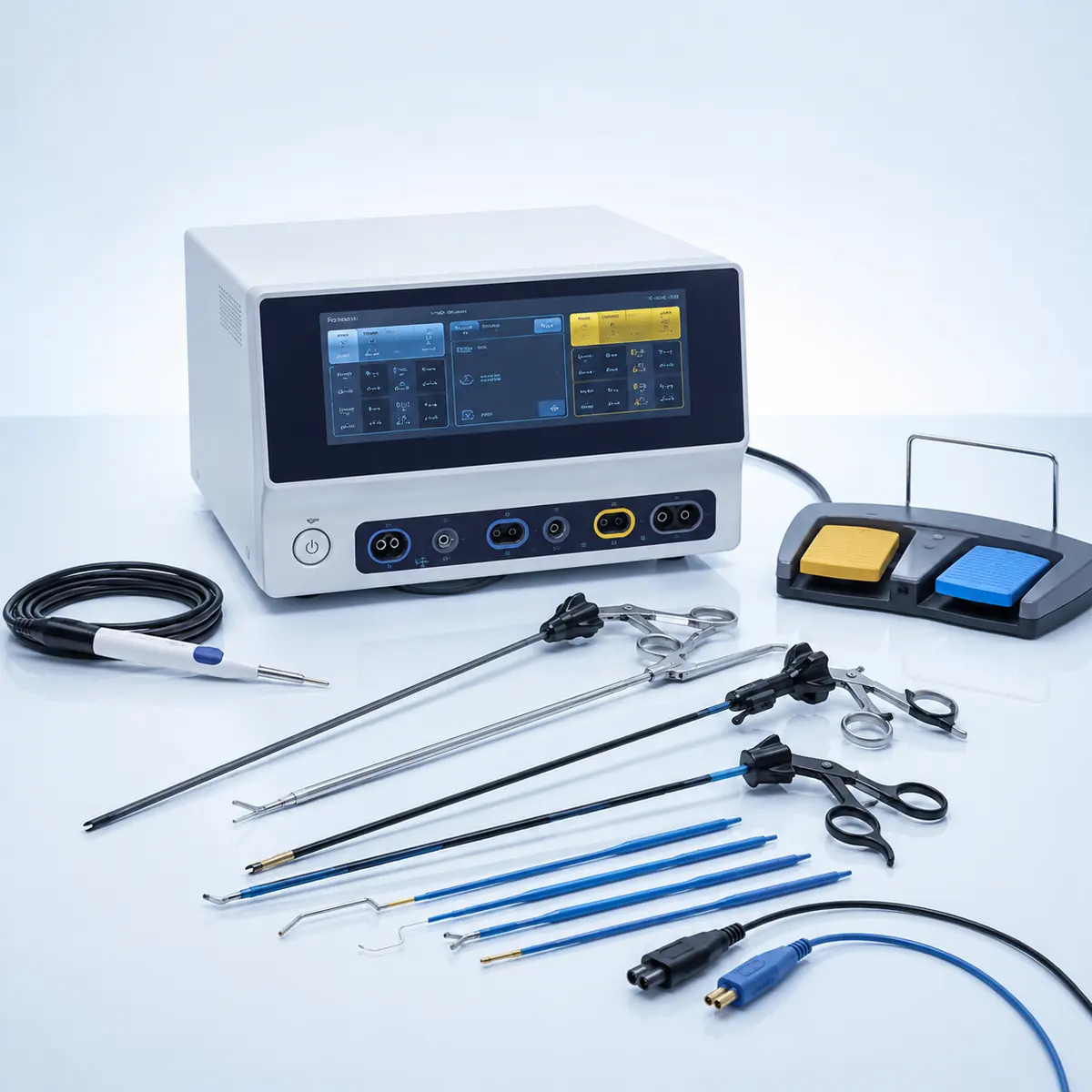
An electrosurgical generator, often called an electrosurgical unit or ESU, produces controlled high-frequency electrical energy for use with compatible surgical instruments and accessories. Depending on the exact model, it may provide selected monopolar cutting and coagulation modes, bipolar coagulation modes or a combination of functions. Its capability is defined by the model's intended use, output characteristics, controls, monitoring, compatible accessories and instructions for use.
Buyers commonly search for a surgical cautery machine or diathermy machine, but those terms are not sufficiently precise for a purchase order. Electrosurgery applies high-frequency electrical energy through tissue using a defined circuit, while true electrocautery heats an instrument tip and does not use the same current path through the patient. The website can acknowledge common buyer terminology, but the quotation and product label must identify the exact technology supplied.
A safe purchase description must identify the complete proposed system, not only the generator cabinet. The buyer should review generator functions, compatible active instruments, bipolar instruments and cables, patient-return components where applicable, activation controls, power supply, documentation, commissioning and service as one controlled configuration.
| System Element | Information to Confirm |
|---|---|
| Generator identity | Legal manufacturer, brand, exact model, model revision, intended use, supplied/new condition, country of origin and current active status. |
| Energy capability | Monopolar, bipolar or combined; every named cut/coagulation mode; specialty functions only when supported; rated outputs, loads and maximum-voltage data where relevant. |
| Output control | Control or tissue-response technology, power-setting method, mode selection, activation priority and limitations supported by exact model documentation. |
| Patient-return system | Compatible single- or split-pad types, connector, monitoring or contact-quality system, alarms, bypass restrictions and approved accessories for monopolar use. |
| Instrument interfaces | Monopolar active ports, bipolar ports, connector types, approved pencils, electrodes, forceps, cables and maximum ratings; no universal-fit assumption. |
| Activation | Footswitch and/or hand control, single or dual pedal, connector, cable length, mode assignment, supplied quantity and approved combinations. |
| User interface and alarms | Display type, controls, indicators, audible/visual alarms, volume or language options, error messages, self-test and event information where available. |
| Electrical and physical | Mains voltage/frequency, power input, protection class, applied-part classification, dimensions, weight, mounting/trolley needs and environmental limits. |
| Evidence and documents | Applicable safety/EMC standards and editions, test reports or certificates, registration/market documents, labels, IFU, service manual availability and traceability. |
| Lifecycle support | Installation, acceptance testing, user/biomedical training, preventive maintenance, performance verification, calibration status, spares, software, warranty, AMC and service response. |
Submit one specification line for each required generator configuration. If different departments need different power ranges, modes, accessories or service packages, list them separately instead of requesting one generic cautery machine.
| RFQ Field | Information to Provide |
|---|---|
| Requirement | New installation, replacement, upgrade, additional theatre, multi-department standardization, tender, rate contract, dealer stock or export project. |
| Clinical departments | General surgery, laparoscopy, gynecology, urology, ENT, ophthalmic, dermatology or other approved scope; list expected procedures without requesting clinical settings. |
| Generator type | Monopolar, bipolar or combined; specialty/low-power requirement; required model or approved equivalent basis. |
| Modes and outputs | Required cut/coagulation/bipolar modes, rated power and load basis, maximum voltage or waveform information where controlled, and any prohibited features. |
| Return electrode | Required pad type and connector, contact-quality or return-electrode monitoring, cable, alarm and existing approved consumables. |
| Active accessories | Pencils, active electrodes, laparoscopic electrodes, adapters, cables, connectors, maximum ratings, reusable/disposable status and required quantities. |
| Bipolar accessories | Forceps or instrument types, cable and connector at both ends, activation, maximum rating, reusable status and quantity. |
| Controls and display | Footswitch/hand control, pedal arrangement, display, preset or memory needs, alarm, language and user-interface requirements. |
| Electrical and installation | Site mains voltage/frequency, plug, earthing, UPS/isolation policy, trolley/shelf, room conditions, installation and acceptance-testing requirements. |
| Documents | Datasheet, IFU, labels, standards declaration, test evidence, registration, current ISO, origin, inspection, calibration/performance, warranty, tender and export documents. |
| Training and service | User and biomedical training, preventive-maintenance schedule, service coverage, spares, software support, AMC, response expectations and escalation route. |
| Commercial and logistics | Quantity, destination, required date, demo/sample policy, MOQ, price, taxes, freight, payment, credit, packing, insurance, commissioning and quotation validity. |
We coordinate specifications across distinct B2B buyer workflows.
Hospitals may submit single-unit, replacement, multi-OT, BOQ, tender, rate-contract or standardization requirements. Include department scope, required modes and outputs, compatible accessory list, return-electrode policy, acceptance tests, user and biomedical training, documents, warranty, preventive maintenance, spares and service expectations.
Biomedical and procurement teams should control the purchase through an approved technical comparison. Ask for model-level datasheets, applicable standards and editions, accessories, mains data, service documentation, installation, acceptance criteria, preventive maintenance, performance verification, spare support and warranty rather than accepting an unqualified equivalent.
Clinical users can state the required departments, instruments, activation preferences and workflow needs already approved by the facility. Generator selection, modes, settings, accessory compatibility and clinical use remain subject to the healthcare organization's governance, product instructions and qualified technical review.
Submit the target market, buyer segment, required generator types, forecast quantity, accessory and consumable demand, registration, tender, demo, training, warranty and service expectations. A purchase does not grant authorization, exclusivity, territory, credit, installation rights, service-partner status or brand-use rights without separate written terms.
Provide the destination country, importer or project details, mains and plug requirements, approved specification, quantity, accessories, labelling, language, registration, shipping, installation, training, warranty and local service responsibilities. Product availability and market-access documents must be confirmed for the exact model and destination before order acceptance.
Our structured procedure ensures all energy configurations, accessory interfaces, and documentation match your hospital requirements.
Send the department/application scope, generator type, modes, output requirements, existing equipment, accessories, mains, quantity, destination and documentation needs.
Attach the hospital specification, BOQ or tender; for replacements, add generator nameplate, port, accessory connector, footswitch, patient-plate and cable photographs.
Bharat Surgical reviews the active supply range, model evidence, compatibility, inclusions, exclusions, installation, training, service, commercial terms and information gaps.
The buyer and qualified technical team answer clarifications and approve the final model, specification, accessories, documents and acceptance criteria.
Bharat Surgical issues a written quotation identifying the legal manufacturer/brand/model, configuration, quantities, price, taxes, freight, payment, warranty, delivery, installation, training and validity.
After order acceptance, the agreed process is followed. Qualified hospital and biomedical personnel complete receiving, installation, safety checks, training and release into service.
Electrosurgical accessories require the same model-level discipline. Patient-return electrodes, active leads, bipolar cables, pencils, footswitches and forceps should be inspected and used only in approved combinations. Regulatory safety notices have documented injury risks associated with patient-return systems and accessory failures, reinforcing why compatibility, condition, monitoring and facility controls must be treated as procurement requirements rather than marketing assumptions.
On receipt, qualified personnel should verify the manufacturer/brand/model, serial number, labels, cabinet and connectors, mains rating, supplied accessories, footswitches, cables, patient-return components, manuals, certificates, packing and physical condition against the approved purchase order. Any mismatch, damage, missing item or unclear identification should be quarantined and resolved before installation.
Keep this page limited to electrosurgical generators and their quoted generator-side set. Route reusable bipolar forceps leads to Bipolar Cables; patient plates and related items to Electrosurgical Patient Plates & Accessories; laparoscopic electrodes and hand instruments to Laparoscopic Instruments; TURP and hysteroscopy electrodes to their approved Urology or Gynecology categories; and equipment illumination to LED Light Source. Do not merge smoke evacuators, vessel-sealing platforms, argon systems, ultrasonic devices or accessories into this category unless the sitemap and verified catalogue are expanded deliberately.
IEC 60601-2-2 addresses basic safety and essential performance for high-frequency surgical equipment and accessories. Buyers may also require evidence for general electrical safety, electromagnetic compatibility, risk management, usability, software, alarms or other requirements depending on the exact model, jurisdiction and intended use. The quotation should state the actual standards, editions, reports and certificates applicable to the proposed unit; it should not convert a requested standard into an unverified compliance claim.
Common queries regarding our electrosurgical generator selection, specifications, compatibility and support.
An electrosurgical generator or ESU produces controlled high-frequency electrical energy for use with compatible surgical instruments and accessories. The exact monopolar, bipolar, cut, coagulation and specialty functions depend on the approved model.
Cautery machine is a common buyer term, but it is not technically precise. Electrosurgery passes high-frequency energy through tissue in a defined circuit, while true electrocautery heats a tip. Confirm the exact technology, intended use and model supplied.
Bharat Surgical accepts enquiries for selected cautery machines or electrosurgical generators. Its current public category shows no verified models, so active units, specifications, inclusions, documents and service must be confirmed before ordering.
Bharat Surgical's profiles describe the Mumbai business as a surgical-instrument manufacturer and supplier, but generator status can differ by model. The quotation should identify the legal manufacturer, brand and whether Bharat Surgical manufactures, supplies, distributes or sources the exact unit.
Bharat Surgical is based in Malad West, Mumbai, Maharashtra, India. Supply, installation, training, warranty and service feasibility depend on the exact equipment, order, destination and accepted written terms.
The verified company profile states that Bharat Surgical was established in 1975. Use the establishment year rather than an automatically changing experience claim.
You may submit monopolar, bipolar, combined, specialty, replacement, upgrade and multi-theatre requirements. Bharat Surgical will confirm which current models fit the approved specification.
They use different electrical paths and accessory configurations. Monopolar systems normally involve an active electrode and a compatible patient-return path; bipolar energy is delivered between two poles of a compatible instrument. Equipment selection and use require model-specific instructions and trained personnel.
Some models may provide both, but combined capability must be confirmed from the exact model. Check every mode, output, port, connector, activation control, accessory and patient-return requirement.
Mode names and functions vary by generator. List the modes required by the approved technical specification and ask the quotation to identify the exact available modes without substituting generic marketing terms.
No. Maximum wattage alone does not define performance, safety or suitability. Compare intended use, modes, rated output at specified loads, voltage or waveform data where relevant, control technology, accessories, monitoring, evidence and service.
It describes model output under stated mode and load conditions. Values from different modes or manufacturers are not automatically comparable unless the measurement basis and supporting documentation are understood by the qualified technical team.
Do not assume automatic tissue response. Ask whether the exact model has a documented output-control or tissue-response function, which modes it applies to, its limitations and the evidence supporting the claim.
It is a compatible component used to complete the circuit during monopolar electrosurgery. The approved electrode type, size, connector, cable, monitoring system, instructions and patient/application limitations must match the generator and facility procedure.
No. Patient-return products can differ by connector, single- or split-pad design, monitoring compatibility, size, intended population and supplied condition. Use only combinations approved for the exact generator.
It is a generator-system function designed to monitor aspects of the patient-return connection when used with approved components. Names and behavior vary by manufacturer. Confirm the exact model, compatible pads, alarms and instructions.
Do not assume inclusion. The quotation should list each pencil, electrode, cable, patient-return lead or pad, bipolar forceps, footswitch, trolley, power cord and manual as included, optional, buyer-supplied or excluded.
Only after model-level confirmation of connector, control method, maximum voltage or power rating, intended use and approved compatibility. A connector that physically fits is not enough.
The activation method and supplied footswitch depend on the model and quoted set. Confirm single- or dual-pedal design, connector, cable length, mode assignment, quantity and whether hand control is also supported.
Submit the required laparoscopic instruments, electrodes, bipolar devices, cables and approved procedure scope. Bharat Surgical must confirm the exact generator and accessory combination; the category page does not establish universal laparoscopic suitability.
TURP and hysteroscopy requirements can involve specific monopolar or bipolar systems, electrodes, working elements, fluids, modes and accessories. Request a complete approved system specification; do not infer suitability from a generic coagulation output.
Not necessarily. Advanced vessel sealing is a distinct model-and-instrument function. Do not advertise or order vessel sealing unless the exact generator, instruments, intended use and evidence support it.
Software status is model-specific. Ask for version identification, update policy, cybersecurity or access controls where applicable, service authorization, records and support life. Do not assume updates are included in the purchase or warranty.
IEC 60601-2-2 sets particular basic-safety and essential-performance requirements for high-frequency surgical equipment and accessories. Ask which exact edition and amendments apply to the proposed model and request the supporting declaration or test evidence.
Availability depends on the model and destination. The quotation should define who installs, performs electrical-safety and functional checks, records acceptance, provides accessories and releases the unit for hospital approval.
Share the required departments and procedures, generator type, modes, rated outputs, patient-return system, existing or required pencils, electrodes, bipolar instruments, cables and connectors, activation controls, mains supply, quantity, destination, required date, installation, training, inspection, regulatory, warranty and service needs. Attach a BOQ, tender schedule, previous model details, equipment nameplate or connector photographs for a faster technical and commercial response.